
Finley Becker · 11 October 2026
Inside the Quiet Mechanics of Regional Craft Economies Adapting to Global Supply Chain Shifts
Regional craft economies have navigated significant changes in global supply chains over the past decade, with producers in areas from the Italian Alps to rural Appalachia adjusting sourcing strategies and distribution methods to maintain output. These adaptations often involve shifts toward local material procurement combined with selective use of international networks that survived recent disruptions.
Patterns of Supply Chain Disruption
Trade tensions and pandemic-related closures prompted many small-scale producers to reassess reliance on distant suppliers, and data from the World Bank trade reports show that craft sectors in emerging markets experienced delays averaging 45 days during peak disruption periods. Producers responded by mapping alternative routes and building relationships with nearby farms or forests for raw inputs like wool, timber, and clay.
Observers note that these adjustments occurred unevenly across regions, whereas European cooperatives leaned on existing EU trade frameworks while counterparts in Southeast Asia explored intra-Asian partnerships to bypass congested ports. Figures released by the Asian Development Bank in 2025 highlighted a 22 percent rise in regional material exchanges among craft groups in Vietnam and Thailand.
Local Sourcing and Technology Integration
Craft workshops have increasingly adopted digital inventory systems that connect them directly with nearby suppliers, and this integration allows real-time tracking of material availability without depending on overseas freight schedules. In one documented case from the Scottish Highlands, textile makers switched to domestic sheep farms after international yarn shipments stalled, resulting in shorter lead times and reduced waste from over-ordering.
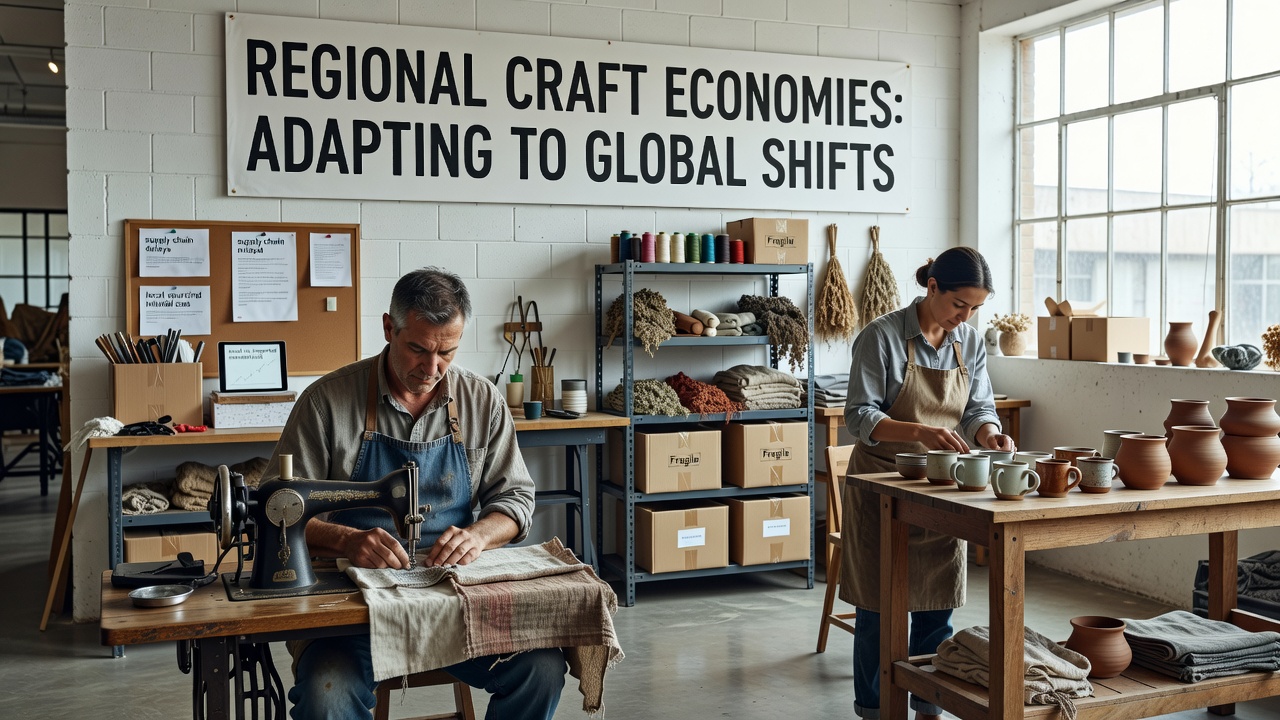
Research from university studies in Canada indicates that craft economies incorporating basic e-commerce tools saw export volumes stabilize by late 2025, even as broader manufacturing sectors continued facing volatility. Those tools often pair with traditional techniques rather than replace them, preserving the handmade character that defines these products in consumer markets.
Policy and Institutional Support
Government programs have played a measurable role in easing transitions, and the European Commission's regional development funds allocated resources in 2024 for training programs that helped artisans audit their supply chains. Similar initiatives in Australia focused on connecting Indigenous craft communities with domestic processors, reducing exposure to fluctuating global commodity prices.
Reports issued in October 2026 by the OECD tracked a modest recovery in craft export values across member countries, attributing gains partly to diversified supplier bases that include both local and select international partners. These findings underscore how incremental policy measures can support producers who operate outside large industrial frameworks.
Challenges in Scaling Adaptations
Small operations continue to encounter barriers when attempting broader changes, including limited access to financing for new equipment and inconsistent quality standards among alternative local suppliers. Data compiled by national statistical agencies in several countries reveal that craft businesses with fewer than ten employees adopted new sourcing practices at roughly half the rate of larger workshops.
Yet collaborative networks have emerged in places like the Pacific Northwest, where woodworkers share bulk orders of sustainably harvested timber to meet minimum purchase requirements from regional mills. Such arrangements distribute costs while maintaining the individualized production that distinguishes craft output.
Conclusion
Regional craft economies demonstrate measurable responses to global supply chain pressures through localized sourcing, selective technology use, and institutional partnerships. Ongoing data collection from organizations like the OECD and the Asian Development Bank continues to track these shifts, providing benchmarks for how smaller producers maintain viability amid evolving trade conditions.